
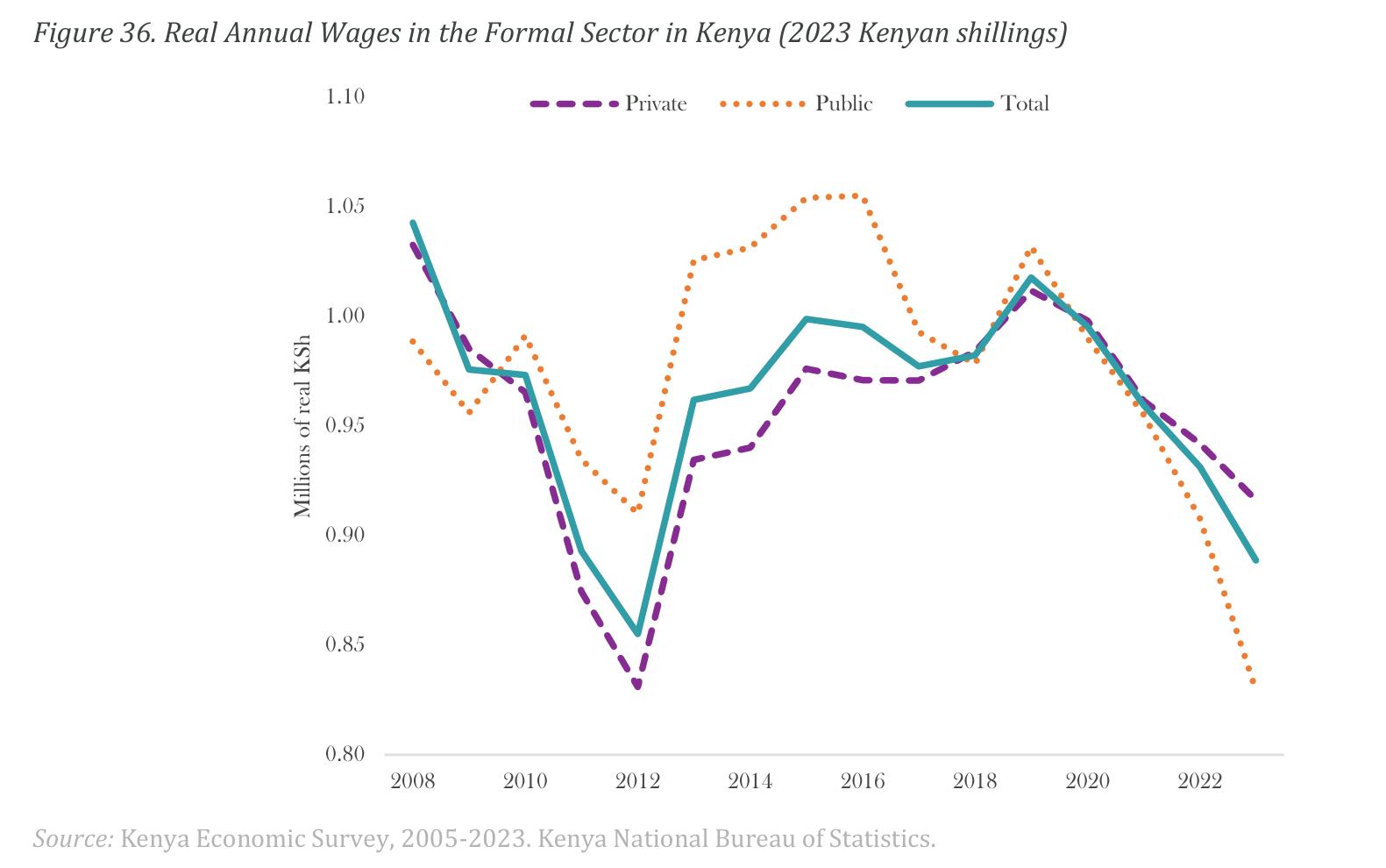
Lower skilled workers, particularly the less vulnerable, are benefiting less from economic growth, creating a growing gap in the economy and making it less inclusive. In Kenya, the quality of employment is partly determined by the skill level needed for a job. Initially, structural agriculture to slightly higher productive service sectors such as trade, construction, and transportation. During 2016-2019, economic and employment growth has come from skill-intensive sectors, but as most workers in Kenya don't possess the required skills to access those available jobs, it means that growth is becoming less inclusive. There has been an overall decline in the share of lower-skilled workers across all sectors between these same years, evidencing discouragement and a fall in labor force participation among those less educated and vulnerable. Thus, it seems that the gains from labor reallocations are fading (World Bank, 2023d). Job creators, firms, are predominantly small and informal, operating mostly in the services sector, which has a limited capacity to trade, expand, and pay higher wages. Although data period, surveys from recent years give a snapshot of Kenya's private sector, particularly with regard to micro, small, and medium sized enterprises (MSMEs). In 2016, there were over 7.4 million MSMEs in Kenya.28 Out of these, 6.4 million (91 percent) were informal micro establishments, of which 4.8 million are one person establishments. Micro establishments (1-4 workers) account for 63 percent of workers in MSMEs, while medium sized firms (20-99 workers) account for 0.7 percent of firms


 原图定位
原图定位