
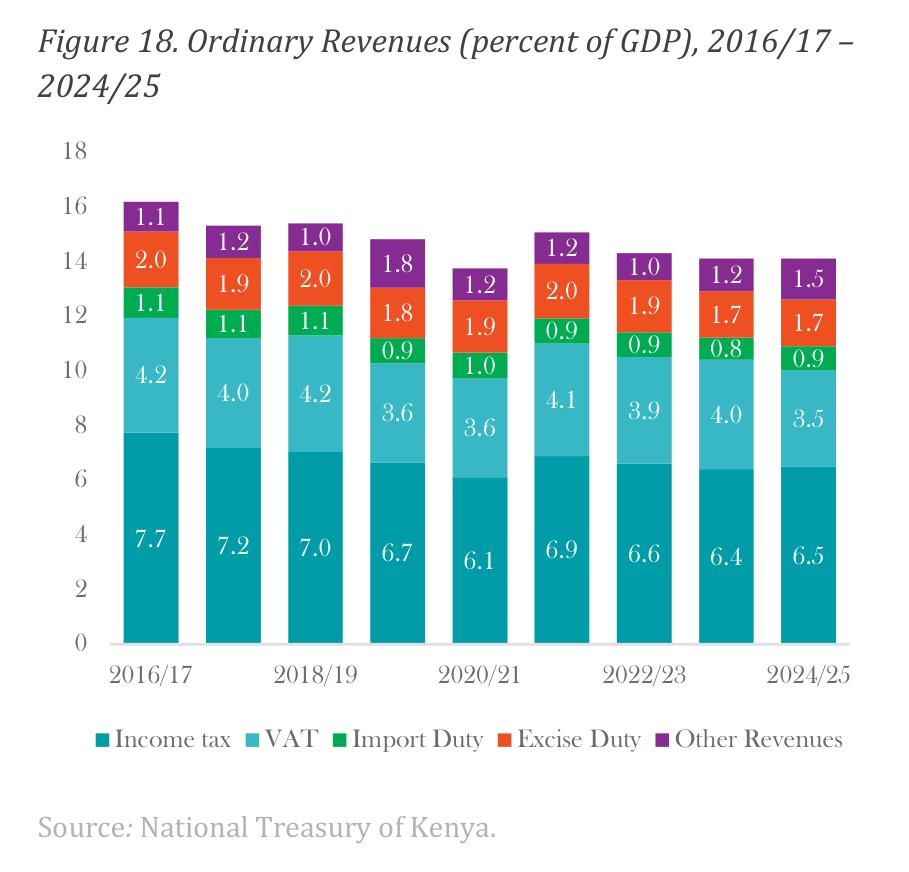
these realities, raising taxes would not yield much additional revenue owing to the country's economic structure. Kenya's tax revenue collection, however, remains below its potential, and thus there is space to increase collection through more efficient taxation. Moreover, the progressivity of the tax system needs to be enhanced. Fiscal incidence analysis results indicate that only the lowest decile of the income distribution benefits from Kenya's fiscal system in cash terms, and thus most of Kenya's public finances as rigidities in the budget increased. More recently and as part of its fiscal consolidation plans, the GoK has been implementing reforms to address fiscal pressures. For example, development expenditure - which includes mainly spending on infrastructure projects - However, important challenges remain on the expenditure and public financial management side of and constitutionally mandated transfers to county governments, which together have increased in size—from 10 percent to 34 percent of total expenditure, or from 13 percent to 53 percent of procurement constitutes a high percentage of public expenditures and GDP, amplifying the expenditure wastage that occurs due to slow, inefficient, or non-transparent procurement systems and practices at various levels of government. The public sector wage bill, including allowances, is subject to complex rules and regulations at the central government and county levels, leading to repeated breach of payroll ceiling. Corruption remains a key challenge, and the Kenyan government acknowledges that tackling corruption is a top priority. These challenges manifest in inflated costs of goods and services and low quality of government-funded projects, all of which contribute to significant losses (World Bank, 2024a ; World Bank, 2025). Moreover, the accumulation of pending bills had effectively shifted a portion of public expenditure to "below the line," amounting to indirect borrowing from the private sector.


 原图定位
原图定位