
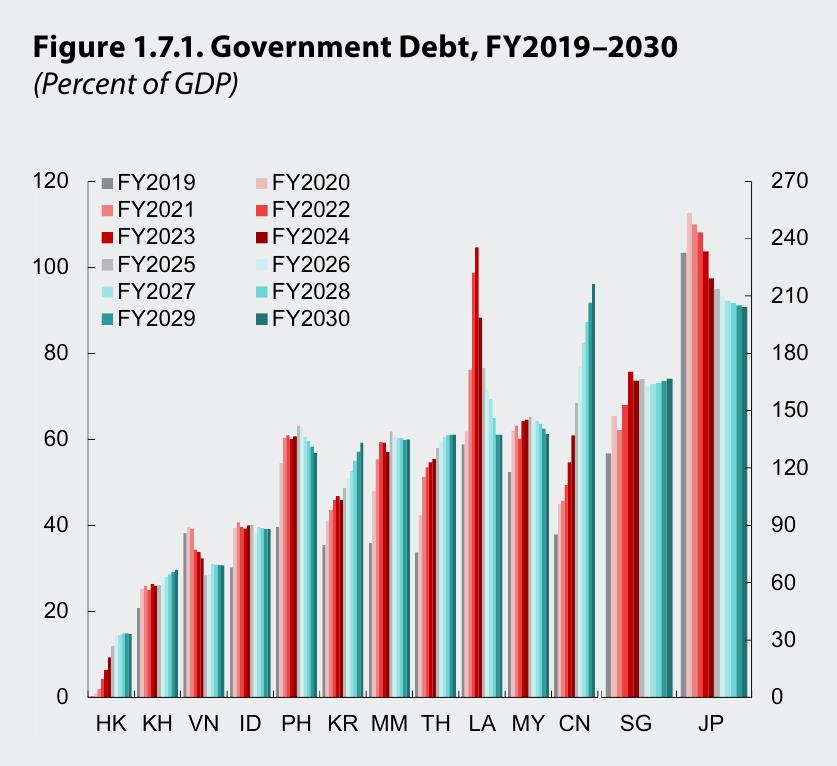
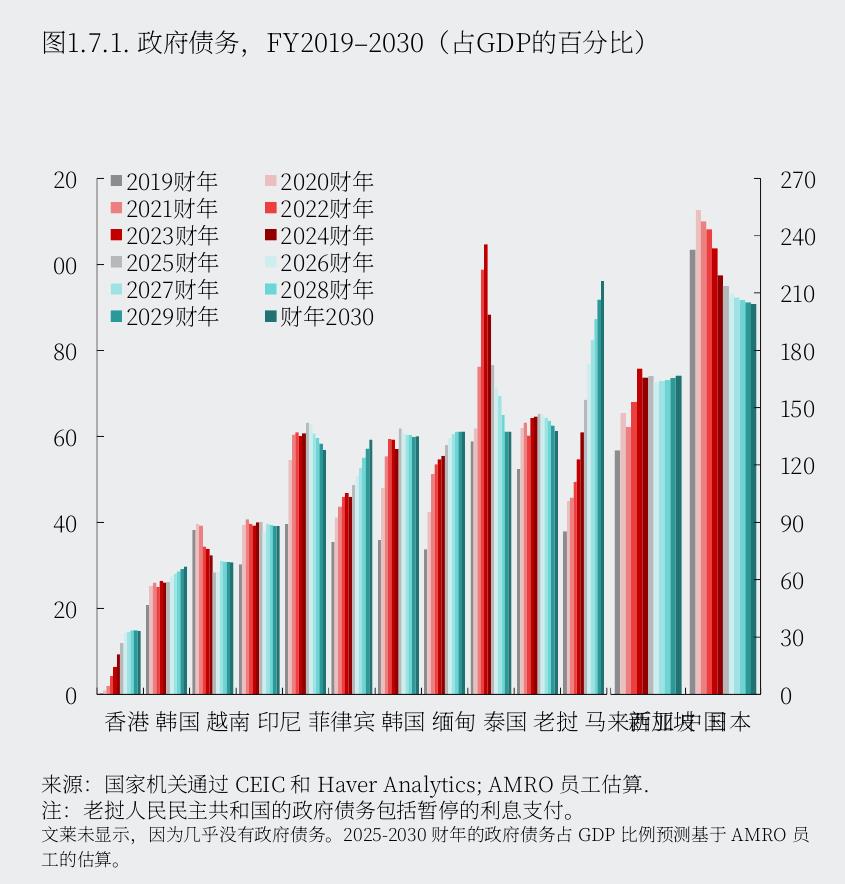
the rise in public debt. In Singapore, bond issuance for non-spending purposes, such as developing the pandemic levels, with gradual stabilization expected with long-term savings instruments, continued to of Japan, Lao PDR and Vietnam - where debt ratios add to the headline debt stock. Meanwhile, currency signs of stabilization in previous years.In several other of foreign-currency-denominated debt, although economies, the debt ratio continued its upward trend, these effects were partially offset by high inflation. with particularly large increases observed in China, followed by Myanmar, Korea, the Philippines, and Over the medium term, government debt-to-GDP in most ASEAN+3 economies, reflecting gradual fiscal consolidation and progress toward debt stabilization. rates were the main drivers of rising debt ratios, to that observed over the past five years, driven by persistently high primary deficits and, in China's case, Source: National authorities viaCEIC and Haver Analytics; AMRO staff estimates. Note: Brunei isnot shown a i has virtullyno government debt. Brunei is not shown as it has virtually no government debt. Government debt-to- GDP ratio projections over FY2025-2030 are based on AMRO staff. where d=debt-to-GDP ratio, pb=primary balance, o=other flows, iw=effective interest rate of total debt, i=effective interest rate of external debt, g=real GDP growth, π=GDP deflator inflation, ε=exchange rate against USD, and α=share of external debt.






 原图定位
原图定位