
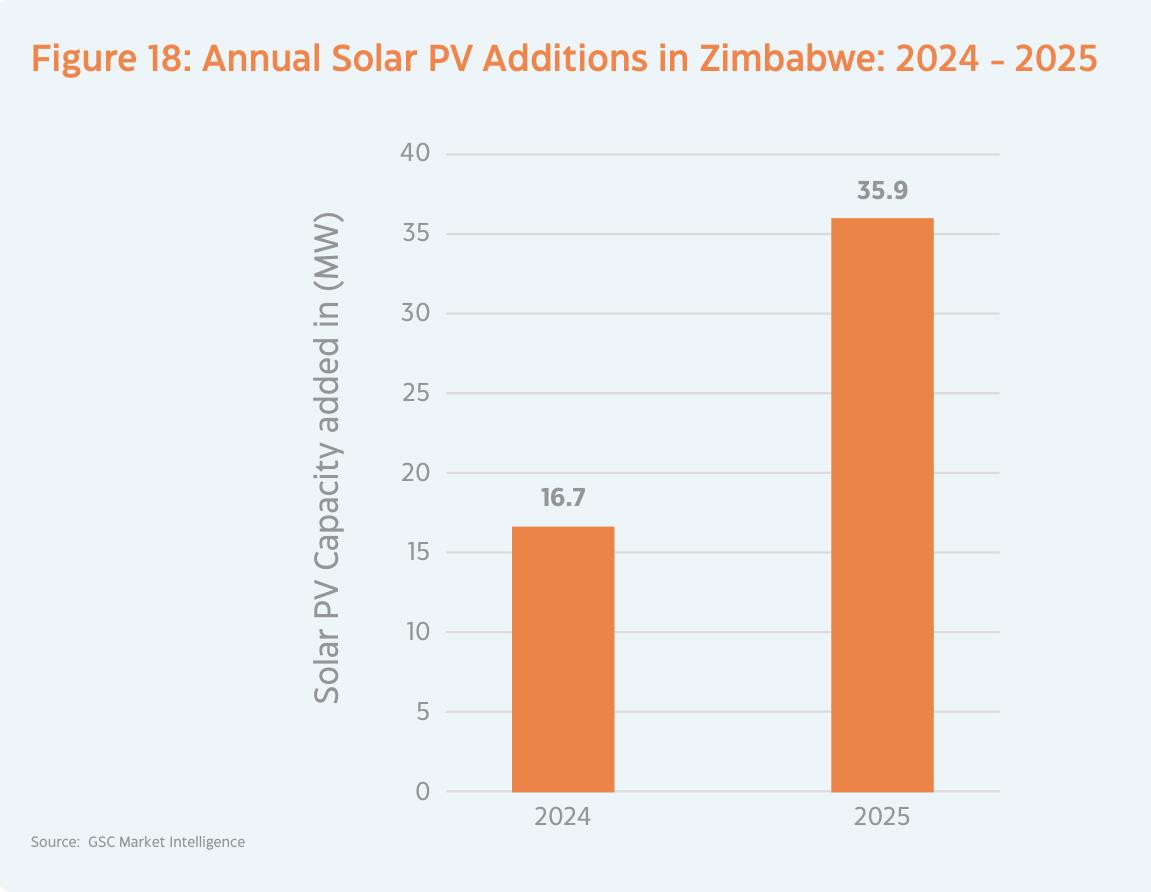
Macroeconomic and Financial Risks: Zimbabwe's volatile currency, high inflation, and limited financing. These macroeconomic conditions also deter international investors and complicate Regulatory and Institutional Barriers: Although policies exist, delays in licensing, lack of standardized PPAs, and bureaucratic inefficiencies slow project development. The absence of absorb intermittent solar generation at scale. In many rural areas, the grid is either non-existent or unreliable, limiting the potential for grid-tied solar projects. to install, operate, and maintain solar systems. This gap is particularly acute in remote regions, where technical support is scarce and system failures are harder to address. the population remains without access to electricity. Several NGOs and private companies are deploying solar home systems and community mini-grids using pay-as-you-go models, which are gaining traction due to their affordability and scalability. The C&l sector is also driving solar adoption. Businesses in mining, agriculture, and manufacturing energy. The National Renewable Energy Policy launched in 2019, sets a target of 1,100 MW of solar PV capacity by 2030. This policy aims to diversify the energy mix, reduce greenhouse gas costs and favorable solar resource availability. The Zimbabwe Energy Regulatory Authority (ZERA) is responsible for licensing IPPs. As of late 2023, over 90 IPPs had been licensed, with solar PV comprising the majority. However, for regional energy trade, especially if domestic solar capacity expands. Moreover, internationall To promote distributed generation, ZERA introduced net metering regulations in 2020, allowing consumers to feed excess solar electricity into the grid in exchange for energy credits. The Solar PV in Zimbabwe is cautiously optimistic. With sustained policy commitment, improved and emerge as a regional leader in decentralized renewable energy. policy uncertainty continue to hinder investor confidence.





![满足AI推理需求所需的计算资源规模(以吉瓦计)[9]](https://file.sgpjbg.com/FileUpload1/News/2a923cfb-8dea-43d4-9114-4097f1972f49.png "满足AI推理需求所需的计算资源规模(以吉瓦计)[9]")

 原图定位
原图定位